
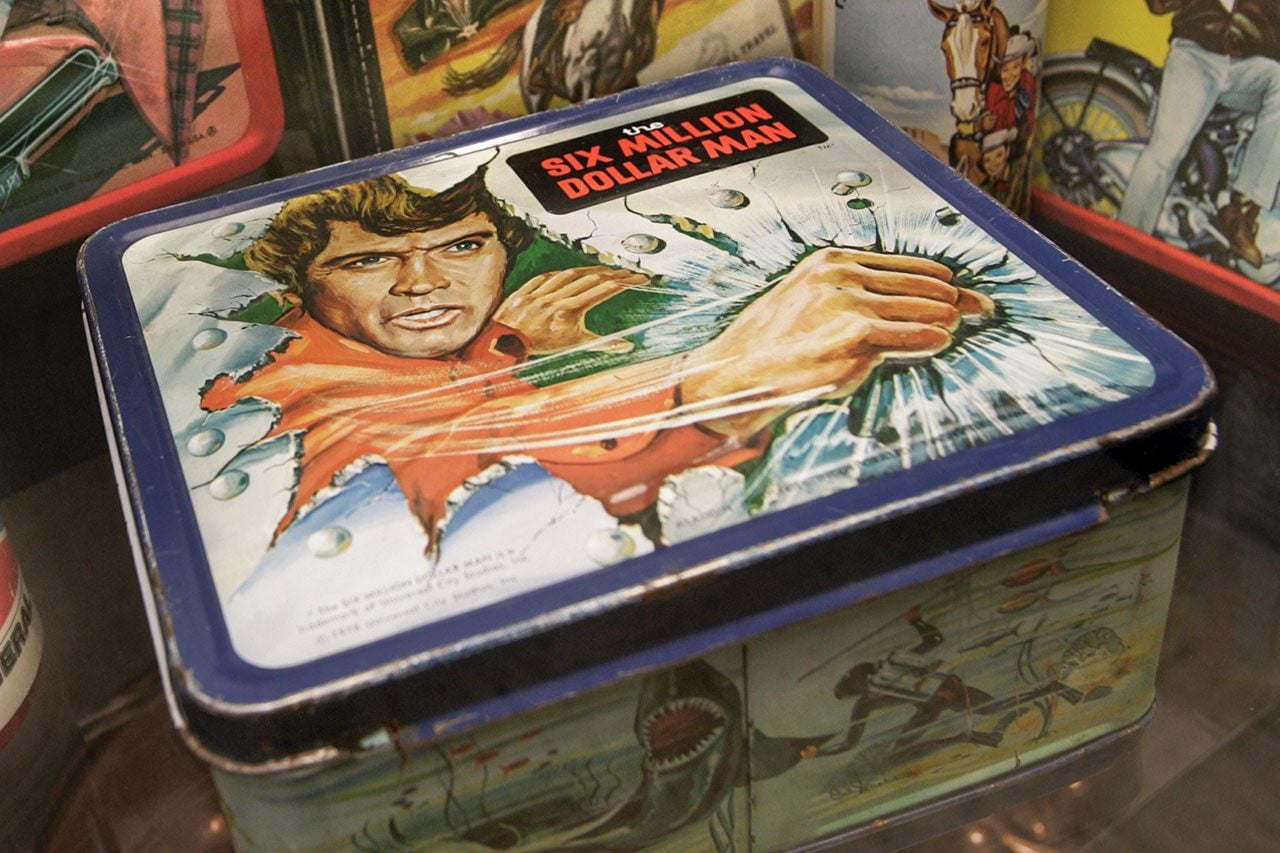

Iconic lunchboxes, matching Thermoses and plenty of bologna: School lunch in the 1970s mixed homemade staples with a new wave of convenience foods.
The 1970s was not exactly a calm decade for America. Between the Vietnam War, political scandal, an energy crisis, and diverse civil rights and environmental movements, there was a lot going on. Fortunately, there was also disco.
Thankfully there were plenty of distractions for kids growing up amid all that upheaval. They watched The Brady Bunch and Sesame Street, thought the Fonz was impossibly cool, and sang along with The Partridge Family before Star Wars took over. The lunchbox had become an important piece of pop culture: a small metal billboard for whatever television show, movie, superhero or band had a kid’s allegiance. The Smithsonian collection includes a 1970 Brady Bunch box, a 1976 Fonz model and even a 1978 Bee Gees version—because apparently nothing says “please don’t crush my PB&J” quite like Barry Gibb.
The 1970s began to change what a packed lunch looked like. Alongside homemade sandwiches and Thermoses of soup were individually packaged puddings, snack cakes and drinks marketed with kids in mind. Open one of those gloriously clunky metal boxes at lunchtime, and you might find a meal that looked something like this.
Peanut Butter and Jelly
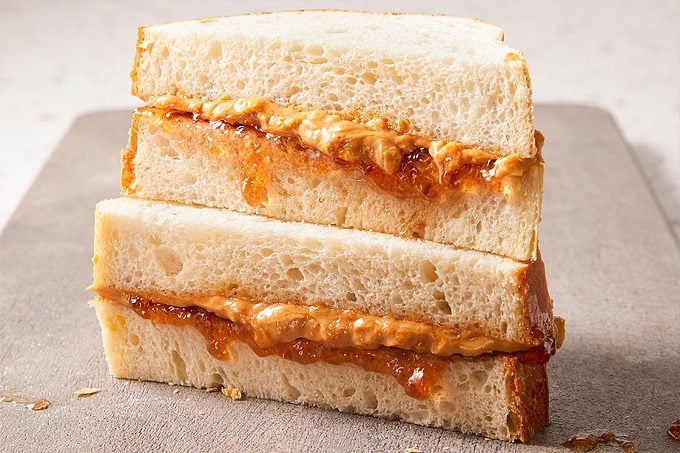
Some lunches transcend decades, and the peanut butter and jelly sandwich is one of them. By the 1970s, PB&J was firmly entrenched as an American childhood staple, helped considerably by the fact that it was inexpensive and easy to make, and that it didn’t require a Thermos.
The classic version was straightforward: peanut butter and jelly spread between two slices of soft bread, then wrapped up and wedged into a lunchbox alongside whatever else was going to school that day. It wasn’t the flashiest thing inside, particularly as individually packaged treats became more common, but it was dependable.
Bologna Sandwiches
If PB&J was the sweet lunchbox standard, bologna was its savory counterpart. A few slices on bread, perhaps with American cheese or a swipe of mustard, made an inexpensive sandwich that required very little work before school.
Bologna also got one heck of a publicity boost in 1974, when Oscar Mayer first aired its famous “Bologna Song” commercial. The ad featured a little boy sitting on a dock with a fishing pole, cheerfully singing his way through “B-O-L-O-G-N-A,” and the jingle became so enduring that Oscar Mayer brought the original commercial back for its 50th anniversary in 2024. For plenty of ’70s kids, eating bologna apparently wasn’t enough; you were expected to spell it, too.
Alphabet Soup
That matching Thermos wasn’t just there to look good next to your Evel Knievel lunchbox. Fill it with something hot in the morning, and a kid could head to school with considerably more interesting possibilities than another simple sandwich.
Alphabet soup was particularly well-suited to the job. Campbell’s had been making its letter-filled vegetable soup for decades, but in 1969 the company officially renamed it “The Alphabet Soup”—just in time for the ’70s. There’s also wonderfully specific evidence that it actually made the trip to school. Smithsonian writer Lisa Bramen, who started elementary school during the decade, remembers eating alphabet soup from the Thermos that fit inside her Peanuts lunchbox.
SpaghettiOs
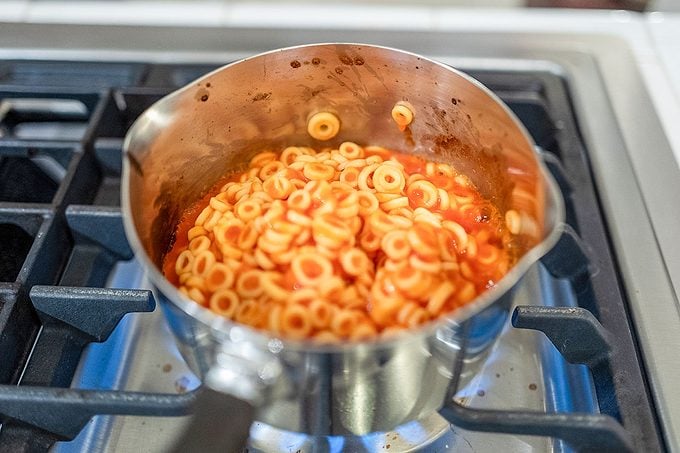
Alphabet soup wasn’t the only canned food that could make the trip to school in a Thermos. Franco-American introduced SpaghettiOs nationally in 1965, billing them as “the world’s first spoonable spaghetti,” and the pasta quickly became a hit with both kids and parents.
That famous O shape was more practical than it might appear. Campbell’s Donald Goerke had been tasked with developing a pasta children could easily eat with a spoon, and considered all sorts of shapes before settling on the ring. By the 1970s, a generation of kids had grown up with the “Uh-Oh, SpaghettiOs” jingle—and with a pasta specially engineered to create fewer lunchtime casualties than a bowl of long, sauce-coated noodles.
Snack Pack Pudding
Few foods demonstrate how much the lunchbox has changed quite like Snack Pack pudding. Hunt-Wesson introduced the shelf-stable dessert in 1968, but a child opening one in the 1970s wasn’t peeling the lid from the familiar plastic cup we see now. Snack Pack originally came in a small aluminum can!
The can made it easier to stash in a lunchbox without refrigeration, and flavors included familiar favorites like chocolate, vanilla and butterscotch. The packaging is the detail that really dates it: Snack Pack didn’t introduce plastic cups until 1984. There’s something wonderfully ’70s about sending an elementary schooler off for the day with an aluminum can of pudding inside a metal lunchbox. Apparently, at the time, we had considerably more faith in children around sharp edges.
Star Crunch
Little Debbie’s Star Crunch couldn’t belong more completely to the decade if it came wearing bell-bottoms. The treat debuted in 1970 as “Moon Crunch Snacks” to celebrate the 1969 moon landing.
Inside the wrapper was a chewy combination of caramel and crisp rice with a chocolatey coating, but the name and packaging leaned enthusiastically into America’s fascination with space. More importantly for the lunchbox, Little Debbie’s individually wrapped treats were ready to be tossed in alongside a sandwich with no portioning, wrapping or explanation required. That’s one small step for snack cakes, one giant leap for whoever was packing lunch.
Zingers
Zingers actually arrived just before the ’70s started, but they settled very comfortably into the disco decade—particularly once the Peanuts gang got involved.
Dolly Madison used Charlie Brown, Snoopy and the rest of the gang extensively in its advertising and packaging during the era, including commercials for Zingers. Snoopy even appeared as the “Zinger Zapper,” swooping in to make off with the creme-filled snack cakes. Zingers came in chocolate, vanilla and raspberry varieties, making them exactly the sort of individually wrapped treat every kid hoped to find in their lunchbox. They did, however, pose a security risk. If Snoopy was willing to steal one, the kid sitting next to you probably was, too.
Little Hug Fruit Barrels
Those little barrel-shaped bottles that seem permanently associated with childhood made their debut right in the middle of the decade. Little Hug introduced its Fruit Barrels in 1974, and claims that the 8-ounce fruit-flavored drinks were the first single-serve kids drink on the market.
A drink packed from home had traditionally meant filling a reusable Thermos; Little Hug offered something considerably simpler. Grab a little plastic barrel, put it in the lunchbox and send it off to school. Long before juice boxes and pouches practically became standard equipment for childhood, the individually packaged drink came in a barrel.
School Milk
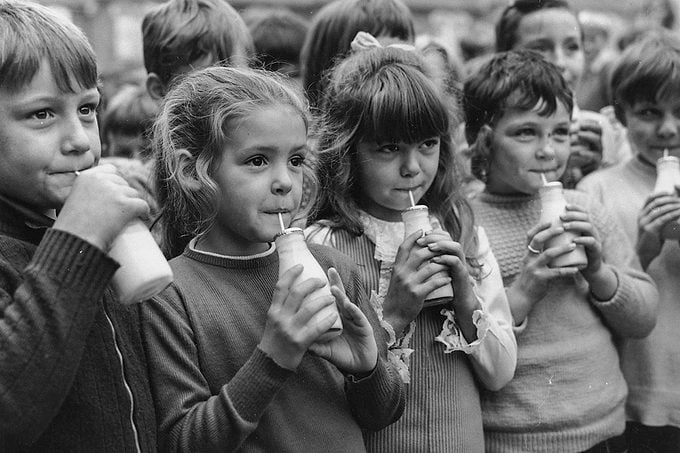
Not every drink had to make the trip from home. Plenty of children who carried their lunches could get milk at school, and the federal government had been encouraging exactly that for years through the Special Milk Program.
The program itself predates the 1970s, but Congress expanded it during the decade. In 1973, eligibility was broadened, and legislation in 1974 established a minimum federal reimbursement for each half-pint of milk served by participating schools and institutions. Whether a given child bought a little milk or received it for free depended on the school and eligibility, but the half-pint of cold milk alongside a packed lunch was very much part of American school life.
Space Food Sticks
America entered the 1970s still thoroughly obsessed with space, and the snack aisle was happy to come along for the ride. Pillsbury developed the food that became Space Food Sticks through its work with NASA, and versions of the sticks actually traveled on Apollo missions.
The store-bought version was individually wrapped and came in chocolate, caramel and peanut butter flavors. Pillsbury initially leaned hard into the space connection, but in 1971 began moving away from the word “space” in its advertising. Eventually they were simply renamed “Food Sticks.” The snack survived into the 1980s before disappearing, but its brief run makes it wonderfully specific to the moment: space-program technology, repackaged for a kid who was going no further than the school cafeteria.

