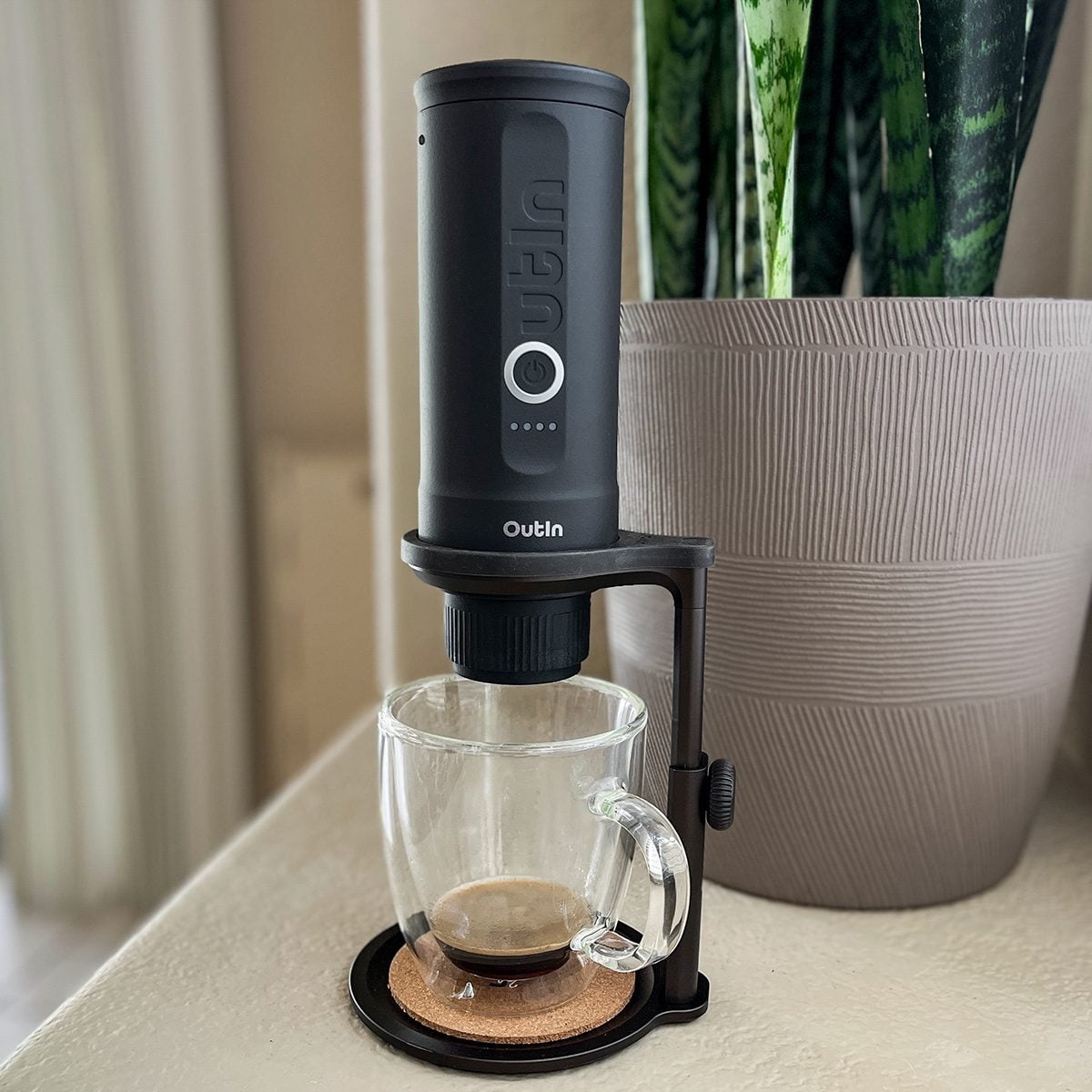
From travel days to busy mornings, I put this portable, self-heating espresso maker to the test to see if it’s worth packing.
Our editors and experts handpick every product we feature. We may earn a commission from your purchases.
Learn more.
I have a habit of stopping for a mid-day espresso no matter what I’m doing—running errands, squeezing in a workout or tackling a long to-do list. It’s part ritual, part necessity.
The problem? The routine adds up quickly. A quick espresso can easily cost $4, and when you’re grabbing one multiple times a week, it’s not exactly budget-friendly. It also doesn’t translate well to road trips, camping weekends or hotel stays with less-than-stellar coffee (you know the kind).
After one too many disappointing cups—and too many unnecessary coffee shop stops—I started looking for a better solution.
That’s what led me to the OutIn Nano portable espresso maker, a water-bottle-sized device that promises cafe-quality coffee anywhere. Naturally, I had to put it to the test.
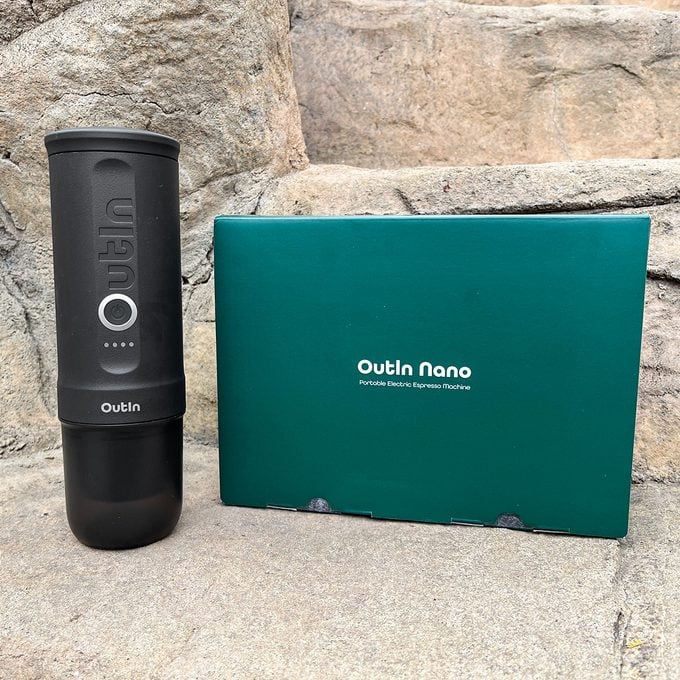
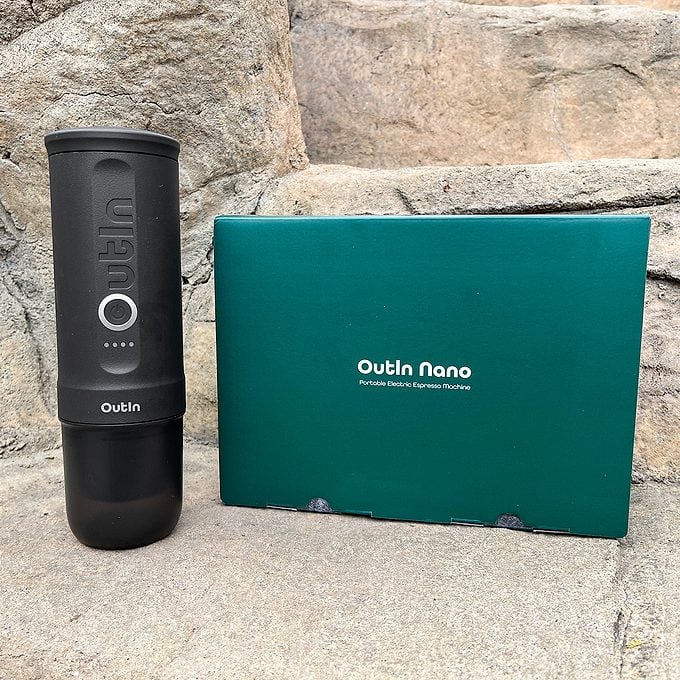
OutIn Nano Portable Espresso Maker
Why I’m Obsessed with the OutIn Nano

As someone who rarely makes espresso at home, I didn’t expect a portable espresso machine to come close to replacing my usual coffee shop fixes—but the OutIn Nano truly impressed me. It has just about everything I want in an espresso maker, whether I’m at home or on the go.
For starters, it’s actually portable. I’ve tried plenty of “portable” products that technically fit in a bag but rarely make the cut when space is tight. The Nano is different: it’s smaller than my water bottle and slips easily into a backpack pocket or car cup holder without a second thought. It even features a built-in cup that doubles as a lid, so you don’t have to worry about drips when packing it up.

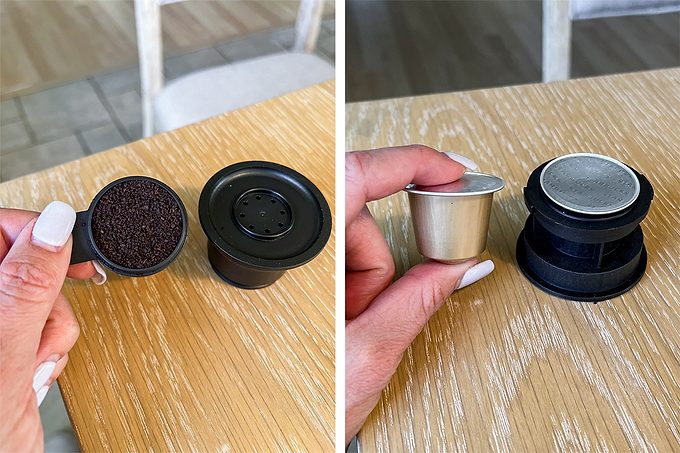
It’s also incredibly versatile. You can use either ground coffee or Nespresso-compatible capsules, which makes a big difference depending on the situation. Grounds are great when you have time to dial things in, while capsules are quicker, cleaner and ideal when you’re on the move.
The real standout, though, is the self-heating function. Unlike many portable espresso makers, the OutIn Nano can heat water on its own in just a minute—no kettle required. That alone makes it far more practical for road trips, camping or anywhere you don’t have access to hot water.
And when you’re not traveling, it still holds its own at home. There’s an optional stand (sold separately) that gives it a more permanent setup, whether you’re using it in your kitchen, a hotel room or wherever you land next. At this point, I’m already looking forward to building out my own little travel coffee setup with a few go-to beans, capsules and other espresso accessories.
In terms of taste, I was genuinely impressed. Espresso made with ground coffee tasted the most flavorful, while capsules still delivered a solid (and convenient) option. Even without being overly particular about espresso, I found it surprisingly good.
How It Works
Before taking the OutIn Nano on the road, I recommend doing a test run at home. There are several parts to get familiar with, and it’s much easier to figure things out when you’re not rushed.
Case in point: the first couple of times I used it, I held the button too long and skipped the heating cycle, sending it straight into brewing mode. Once you know the difference, it’s simple—but it’s the kind of thing you’ll want to learn once, not on the go.
After the initial learning curve, the process is surprisingly straightforward. The OutIn Nano works with both ground coffee and Nespresso-compatible capsules, and you can use either hot or cold water depending on what you have available.

For ground espresso, fill the filter basket, tamp it lightly with the included measuring scoop and attach it to the machine. If you’re grinding your own espresso beans, aim for a texture slightly finer than table salt for the best results. Capsules are even simpler—just pop one into the adapter.
From there, add water to the main chamber, which is clearly labeled for easy measuring. A single press starts brewing immediately if you’re using hot water. If you’re starting with cold water, press and hold the button to activate the heating function. In my testing, the process—from button press to having espresso in hand—took 1 minute and 40 seconds (using room-temperature water; colder water takes slightly longer).
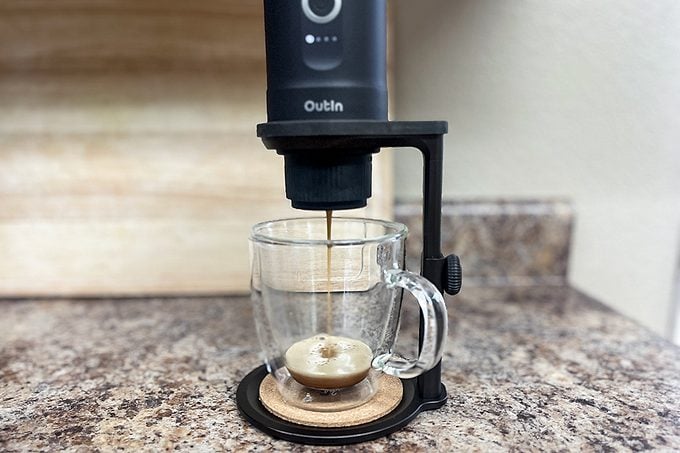
Once it starts, the machine handles the rest, delivering a single shot of espresso with a surprisingly solid layer of crema. After a couple of uses, it becomes a true one-button system.
What to Know Before You Take Your Espresso on the Go

After testing the OutIn Nano, there were a few details that stood out—some helpful, some easy to overlook.
First, it arrived about 75% charged right out of the box, which meant I could start using it almost immediately. That said, the brand recommends not running it below 50%, so it’s worth keeping an eye on the battery. (Luckily, you can check the charge with a quick press of the button.)
Battery life depends on how you’re using it. When heating cold water, I was able to get several shots per charge—typically around four to five with a smaller 50-milliliter pour, or closer to two to three if you’re making a longer espresso. That smaller amount also produces the most traditional shot (about 30 milliliters), while a larger pour gives you more of a lungo.
If you’re using your own beans, grind size matters more than you might expect. I found that going slightly finer than table salt gave me the best results.
And while it’s designed for travel, the setup feels surprisingly polished. The packaging is sleek and thoughtfully organized, and it comes with a quick-start guide and troubleshooting tips, which I was grateful for during my first few attempts.
After a few uses, it all clicks—and suddenly, making espresso anywhere feels surprisingly normal.
Is the OutIn Nano worth it?

At $149, the OutIn Nano portable espresso maker is definitely an investment, especially compared to a basic at-home coffee maker. But if you’re someone who regularly spends $3 to $4 (or more) on espresso drinks, it doesn’t take long for it to pay for itself.
What makes it stand out, though, is how well it delivers on both convenience and performance. It’s not just a travel gadget—it’s a genuinely functional espresso maker that works just as well at home as it does on the go.
According to Clint Proctor, owner and operator of Conlan Coffee, a mobile espresso bar business, one of the most important features to look for in a portable espresso maker is a built-in heating element—especially for situations where you won’t have access to hot water. “For those who won’t have access to a kettle while traveling, they’ll want to make sure their machine can heat water on its own and in a timely manner,” he explains.
Proctor also recommends choosing a machine that can use both ground coffee and capsules for maximum flexibility, noting that it allows for “a faster, mess-free option when you’re in a rush.”
That’s exactly where the OutIn Nano excels. Its self-heating function, ability to use both ground coffee and capsules, and overall ease of use check all the boxes Proctor recommends. It’s truly a versatile option whether you’re at home, in a hotel room or out on the road.
If you’re someone who values good espresso and wants the flexibility to make it anywhere, the OutIn Nano is absolutely worth considering. After testing it, it’s one of the few products I’ve tried that actually lives up to its “portable” promise—and earns a spot in my regular routine.
Where to Buy
OutIn Nano Portable Espresso Maker
You can pick up an OutIn Nano portable espresso maker for all your adventures on the brand’s website, Amazon or Walmart. It retails for around $150.