


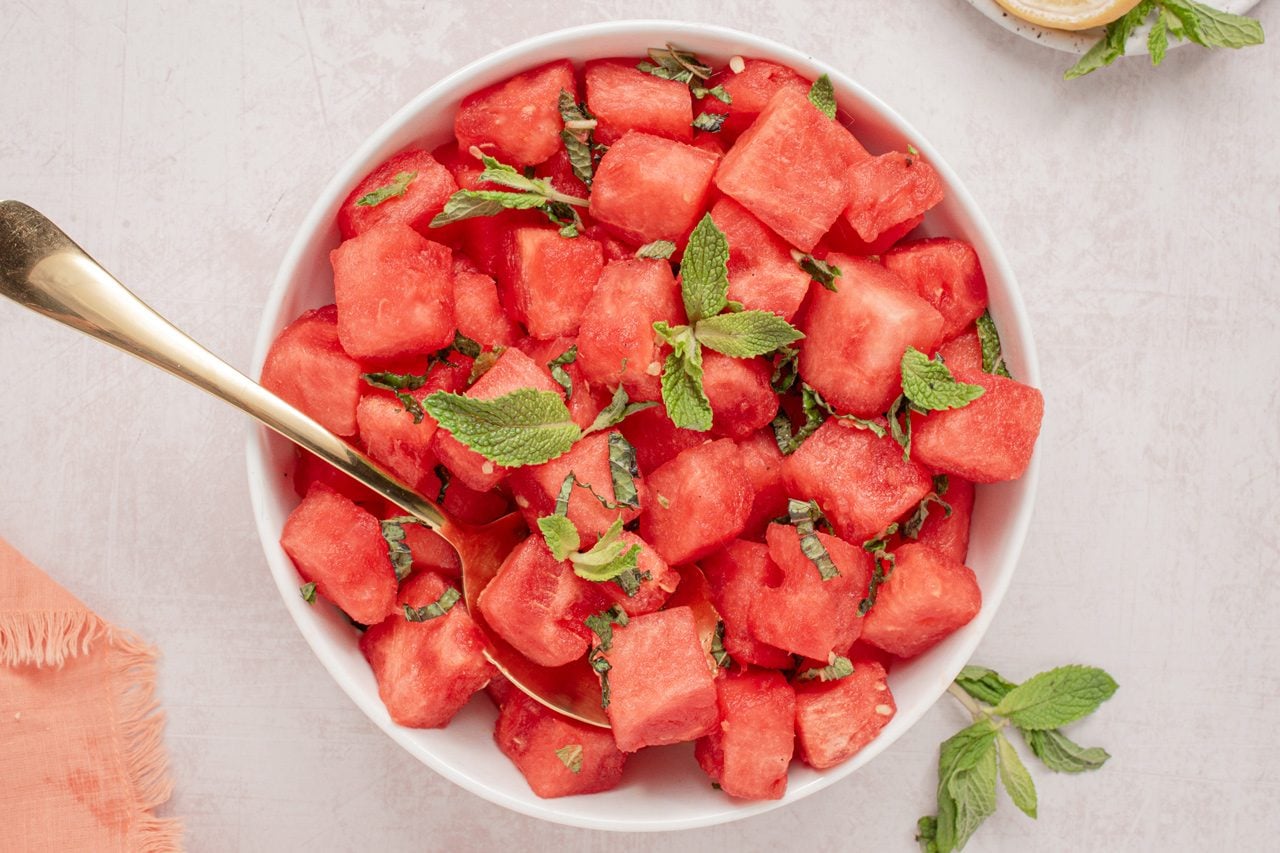

Watermelon is sweet, refreshing and also really good for you! From keeping you hydrated to supporting heart health and helping with exercise recovery, here's why this juicy fruit deserves a spot on your plate.
In my house, there’s some debate over the best way to eat watermelon. My husband salts his slices, while I like mine partially frozen so it’s a sweet, icy treat that feels a little like watermelon ice cream. But one thing we both agree on? There’s no summer produce quite as refreshing or craveable as a perfectly ripe, juicy watermelon from our local produce stand.
There’s no doubt that watermelon is delicious, but people are always asking me if it’s good for you. As a dietitian, my answer is an easy yes. Its natural sweetness comes packaged with water, fiber, vitamins, minerals and beneficial plant compounds. It can help you stay hydrated on a hot day, and those nutrients help support everything from heart health to exercise recovery.
So go ahead and pick a perfect watermelon and try a fun new way to eat watermelon. This juicy summer favorite proves that nutritious foods don’t have to be complicated or boring.
Watermelon Is Healthier Than Most People Realize
Watermelon may feel like dessert, but this summer favorite offers more nutrition than many people realize. It’s a naturally low-calorie fruit that’s about 92% water, making it a refreshing way to support hydration. It also provides beneficial nutrients and plant compounds, including vitamin C, potassium, lycopene and citrulline. Together, this combination of hydration, nutrients and plant compounds makes watermelon a healthy choice.
But doesn’t watermelon have too much sugar?
Because watermelon tastes almost as sweet as candy, it’s easy to assume that it’s loaded with sugar—but there’s more to the story. Like all fruit, watermelon contains naturally occurring sugar, which is not the same as the added sugars found in foods like soda and baked goods. The biggest difference is that watermelon’s sugar comes packaged with water, fiber, vitamins, minerals and beneficial plant compounds. Your body responds to the whole food, not just the grams of sugar.
If you’re mindful of blood sugar, you don’t need to skip watermelon. Enjoying it alongside a source of protein or healthy fat, such as Greek yogurt, an omelet, a handful of nuts or a cheese stick, can make it a more satisfying snack that helps maintain balanced blood sugar levels.
5 Health Benefits of Eating Watermelon

1. Helps you stay hydrated
Watermelon is about 92% water, making it one of the juiciest ways to increase your fluid intake, especially during the hot summer months. While plain water is still the best way to stay hydrated, water-rich foods like watermelon can contribute to your overall fluid intake.
2. Boosts exercise recovery
If you’ve ever finished a tough workout and felt like your muscles were filing a complaint the next day, watermelon may be worth adding to your post-workout meal. It contains citrulline, an amino acid that supports healthy blood flow. Improved blood flow helps deliver oxygen and nutrients to your muscles, supporting recovery and easing soreness. Plus, its high water content can help you replenish fluids after a sweaty workout.
3. Provides antioxidants that support healthy aging
Watermelon’s gorgeous color isn’t just for looks—it comes from lycopene, the same antioxidant that gives tomatoes their deep red color. Lycopene helps protect your cells from oxidative stress, a type of cellular damage that can accumulate over time, contribute to the aging process, and increase the risk of heart disease and cancer.
Watermelon also provides vitamin C, another antioxidant that supports your body’s natural defenses and plays an important role in collagen production, helping maintain healthy skin and tissues as you age.
4. Supports heart health
Watermelon contains several nutrients that make it a heart-healthy snack. Lycopene helps support healthy cholesterol levels, protects cells from damage and may help keep inflammation in check. Citrulline supports healthy blood flow by helping your body produce nitric oxide, which relaxes blood vessels. And potassium helps maintain healthy blood pressure.
5. Can help with healthy weight management
Watermelon’s high water content means it provides plenty of volume for relatively few calories. You can enjoy a generous serving that feels satisfying and still fits into a balanced eating pattern. If you’re looking for a lighter way to satisfy a sweet tooth, watermelon’s natural sweetness makes it a simple, low-calorie dessert.
Easy Ways to Eat More Watermelon
When a food tastes as good as watermelon, eating more of it doesn’t take much convincing. Watermelon’s sweet flavor and juicy texture make it easy to add more fruit to your day, whether you enjoy it sliced, blended into a smoothie or tossed into a refreshing watermelon salad.


