


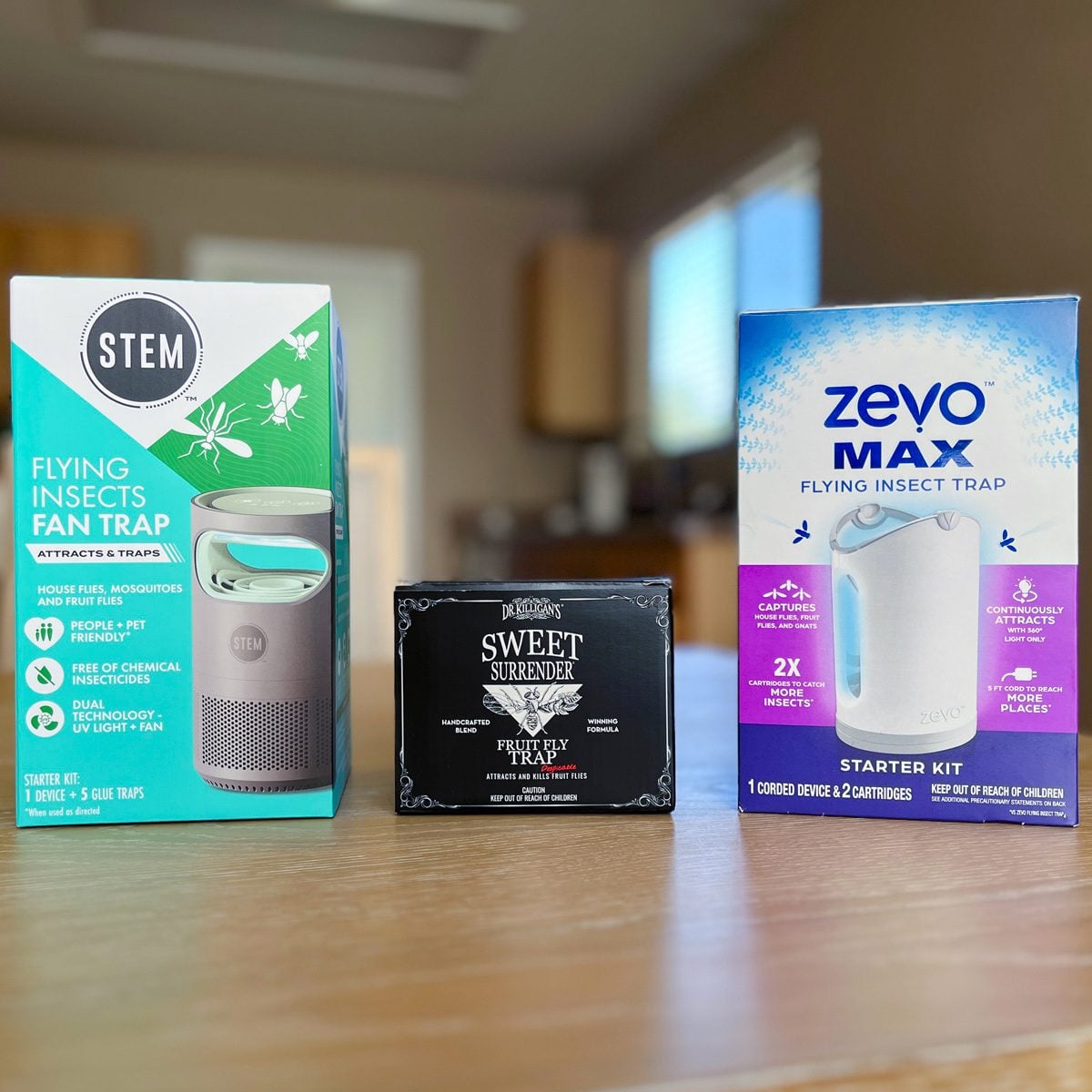

Trying to find out how to get rid of fruit flies? We spoke to a pest expert from the NPMA and an entomologist for tips on taking back your home.
Our editors and experts handpick every product we feature. We may earn a commission from your purchases.
Learn more.
Ahh, summer. The season of fruity salads, fruity drinks and… fruit flies? Unfortunately, these annoying vermin seem to come out of nowhere as soon as the weather warms up. If you’ve noticed an uptick in fruit fly activity this season, you’re not alone. In fact, summer and fall are the most common times you’ll see these pests populate—oftentimes in our own homes.
“While fruit flies, sometimes known as ‘vinegar flies,’ can occur year-round, they are most likely to become an indoor nuisance during the summer and fall when food is abundant,” says Patricia Hottel, Entomologist at Orkin. “Warmer temperatures speed up their development, allowing populations to increase quickly, and they are strongly attracted to ripening or fermenting fruits and vegetables, which are more common during these months.”
So, how do you fight these flying insects? We spoke to several experts to understand why folks might see a surge in activity, and what to do to eliminate these pesky, peace-shattering parasites. Whether you’re dealing with a few or an infestation, here’s what you need to do now to take back your home.
Here’s Why You Have Fruit Flies
According to Josh Sprague, Technical Service Manager A.C.E., PCQI for Terminix, there are various reasons why people might notice an uptick in fruit fly activity in their homes:
-
- Hitching a Ride: Fruit flies act as hidden passengers on store-bought or homegrown produce.
- Following Scents: They have a strong attraction to the odors of ripening, fermenting, overripe, or decaying fruits and vegetables, following these smells through open doors and windows.
- Rapid Breeding: Populations multiply rapidly in warm, humid environments. And during the hotter months, their lifecycle can speed up.
- Hidden Hotspots: Beyond produce, they quickly seek out hidden breeding spots like unsealed trash bins, sugary liquid spills, and organic buildup inside sink drains and garbage disposals.
Why Fruit Flies Are Hard to Eliminate

Unfortunately, fruit flies are also tiny—around 1/8 of an inch, according to board-certified entomologist Dr. Jim Fredericks. This means they can fit through screen gaps and hide efficiently behind fridges, dirty mop heads, or in sponges left in the sink.
“Once in, they breed fast,” warns Dr. Fredericks, who acts as senior vice president of public affairs at the National Pest Management Association (NPMA). “A female fruit fly can lay around 500 eggs, and those eggs can hatch in as little as 24 hours. Under the right conditions, a full lifecycle can be completed in about a week. That’s why what starts as a few flies can feel like a full-blown infestation very quickly.”
What You Can Do About It
While controlling an active infestation can seem daunting, there are a few simple solutions worth trying. Usually, it takes a combination of these solutions to see results.
Eliminate the Source
“The most important thing to understand about fruit fly control is if you’re not eliminating the source, you’re not solving the problem, since fruit flies are in different stages of development,” explains Dr. Fredericks.
Before implementing any commercial or homemade solutions, he recommends following these steps:
- Remove the food source first. Dispose of any overripe, damaged or decaying produce. Store remaining fruits and vegetables in the refrigerator.
- Clean drains and garbage disposals regularly. Fruit flies breed in the organic debris that often builds up inside garbage disposals.
- Don’t ignore the recycling bins. Residue inside beverage cans is attractive to fruit flies, especially beer and wine. Even juice and soda containers can begin to ferment, which is attractive to them. Don’t forget to keep the bins clean, too.
- Wipe down counters and empty trash frequently. Even small residues from spills or juice can sustain a population.
- Inspect incoming produce. Before putting groceries away, check for any signs of damage or overripeness that could introduce eggs into the home.
- Seal entry points. Make sure window screens fit and doors seal properly.
Set Traps
While DIY and store-bought methods are great for eliminating adult fruit flies, an active infestation typically requires both adopting new cleaning habits and, sometimes, the help of a professional.
“While DIY traps are popular for catching adults, it is important to note that they provide temporary relief and will not fully resolve an infestation unless the breeding source is removed,” warns Sprague. “People should remember that chemical sprays or adult traps alone aren’t a complete solution. They might be helpful for temporary relief, but true control requires combining products with continuous preventative habits.”
There are many different types of commercial traps available, each with its own advantages and disadvantages. To see which are most effective, we tapped tester Nancy Snyder to evaluate a few options and report her results.
Sticky Traps
Sticky traps, such as flypaper, use adhesive surfaces to capture insects. Sprague explains that these work by physically trapping flies. When adult fruit flies land on the sticky backing, they can no longer retreat to their hiding places. This is also one of the most cost-effective methods for trapping, as Snyder picked up a 40-pack of Kikalife sticky traps for only $7.
“My houseplants are a magnet for fungus gnats (which, admittedly, I had always lumped into the fruit fly category), and thanks to a few citrus trees, fruit flies also tend to congregate around my kitchen,” says Snyder. “To test these traps, I tucked several into my potted plants’ soil and placed a few more in cups near the trash can and kitchen sink—two of the biggest trouble spots in my home.”

After checking the traps past the 24-hour mark, she was equal parts impressed and horrified by how well these worked.
“The bright-yellow fruit-shaped traps had captured dozens of fruit flies and gnats, with the double-sided adhesive quickly filling up on both sides,” she says. “These simple sticky traps delivered some of the most impressive results of any fruit fly trap I tested, especially around houseplants.”
She does note that when hidden inside one of her potted plants, these traps are fairly discreet and can even pass as decor. However, in more visible locations, they can become a bit of an eyesore as captured pests accumulate.
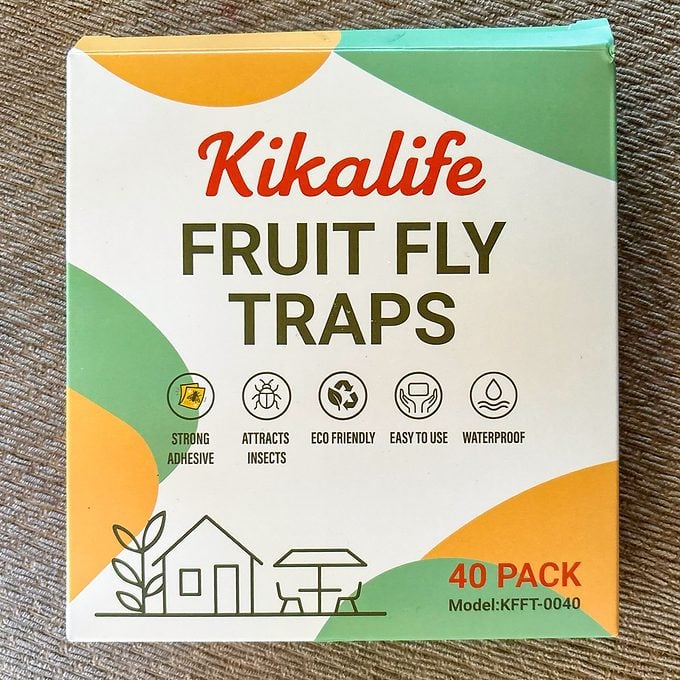
Kikalife Fruit Fly Trap & Fungus Gnat Traps
Liquid Traps
“A DIY trap uses a bowl or jar filled with an alluring liquid (like apple cider vinegar) mixed with a drop of dish soap to break the surface tension, causing the flies to sink and drown,” says Sprague. He goes on to note that liquid traps exploit the pest’s attraction to fermenting liquids.
We’ve tried several of these DIY fly traps in the past, including a trap that uses a spoiled banana and beer, one that utilizes balsamic or red wine vinegar and one that combines milk, dish soap and pepper. Those didn’t yield significant results, but a simple trap like Sprague describes, containing dish soap, apple cider vinegar and hot water, worked well for catching adult fruit flies.
While many folks opt to DIY this kind of trap, you can also purchase kits that contain custom plant-based liquid attractants to lure fruit flies. We tested Dr. Killigan’s Reusable Fruit Fly Trap kit, which comes with the trap and two bottles of solution.

“Unlike the other traps I tested, Dr. Killigan’s doesn’t rely on light, fans or sticky surfaces. Instead, it uses a liquid attractant designed specifically to lure fruit flies into the trap,” says Snyder. “I’ll admit that the attractant smells strongly of vinegar—something that I thought was going to be a deal breaker for me. However, I was pleasantly surprised to find the smell quickly dissipated and I honestly never smelled it again.”
Because it doesn’t require an outlet, cord or batteries, Snyder found it much easier to place in a small corner of her countertop where a plug-in trap wouldn’t be practical. That makes this option well suited for kitchen counters because the compact design blends in easily, there are no cords to manage, and unlike sticky traps, it doesn’t put every captured fruit fly on display next to your coffee maker or fruit bowl.
While convenient, it’s worth noting that the compact design could be knocked over more easily than a plug-in trap.
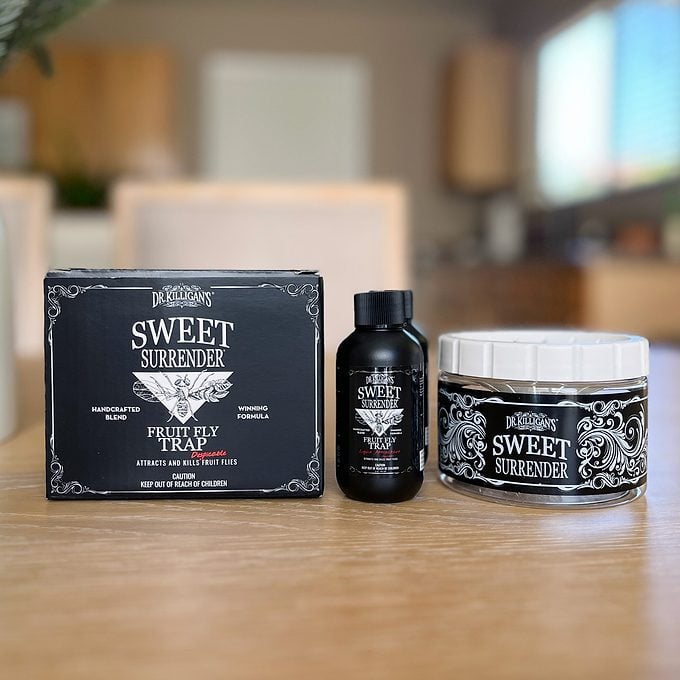
Dr. Killigan's Reusable Fruit Fly Traps
LED Insect Light Traps
“For businesses requiring high hygiene standards (like restaurants, bars, and food processing facilities), commercial systems like an LED-powered insect light trap would be an option,” says Sprague. “It is important to note that while red-eyed fruit flies are attracted to light, they are not nearly as attracted to light as other fly species. Vinegar or beer traps are more effective for adult control.”
While Sprague mentions that these are typically reserved for commercial spaces, there are a few cheaper options you can pick up in your local store. Snyder tried the Zevo MAX Bug Catcher, which uses a combination of sticky paper and blue light to attract gnats, fruit flies and other small pests. This was her favorite option, as she found it the most effective overall.

“This might seem like a given, but I found this trap worked best when placed in high-traffic areas of the home, such as the kitchen or near a frequently used door,” says Snyder. “When I moved it to the kitchen near a frequently used door, it quickly became a catch-all for fruit flies, mosquitoes, moths and other mystery bugs that had found their way inside. And thanks to its smart light, it lures flying insects 24/7.”
The adhesive cartridges sit inside the unit, so the trap looks cleaner than traditional sticky traps and keeps captured insects out of sight. The larger size also gives this trap more presence than typical plug-in models, making it a particularly good choice for bigger rooms or households dealing with a heavier flying insect problem. One cartridge can last for up to three months, or about two weeks for heavy infestations.
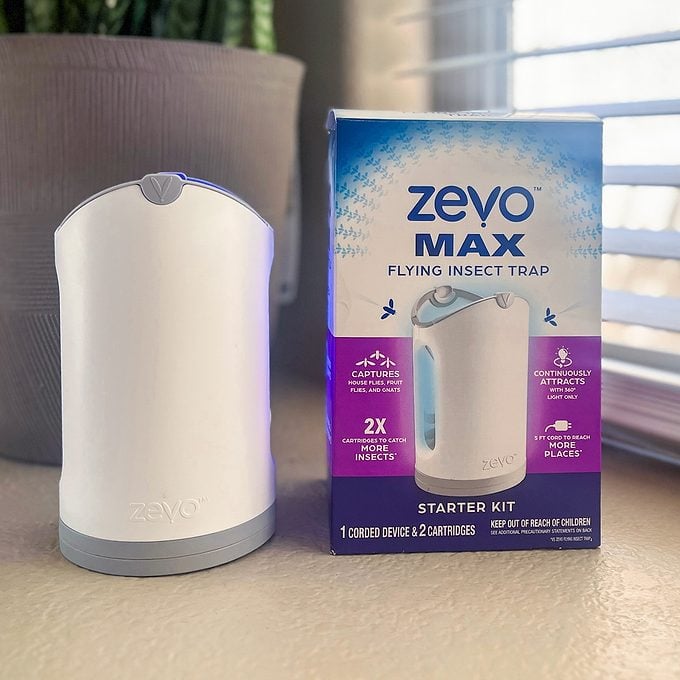
Zevo Max Flying Insect Indoor Fly Trap
Combination Traps
In addition to the traps we already explored, there are some commercially available options that combine one or more of these traits for additional protection. We tried the STEM Flying Insect Fan Trap, which uses a combination of sticky paper, UV lights and a rotating fan to lure and trap fruit flies. While it’s similar to the Zevo trap, there are some slight differences.

“Unlike the other traps I tested, this one features a touchscreen that offers some control over how it operates, including multiple timer options and an accelerated fan setting for additional trapping power,” says Snyder. “The built-in fan is audible, but only if the room is quiet. Because the insects are drawn into the device and trapped internally, the overall look feels cleaner and more discreet than many sticky traps or exposed adhesive cartridges.”
That said, she didn’t love the timer option. Between remembering to turn it on each night and hearing the fan while it operated, she was more conscious of having a bug trap in her home than she would have liked. However, it was effective and offered noticeable results.
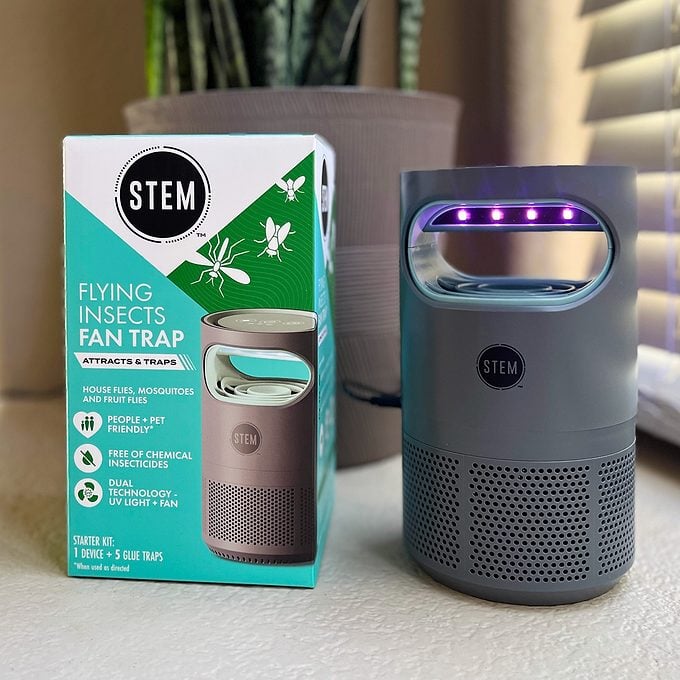
STEM Flying Insect Fan Trap
Prevention is Key
“The best thing a homeowner can do when it comes to fruit flies is prevention,” notes Dr. Fredericks. “Simple, consistent habits make a difference.” He recommends putting these habits into practice to prevent future outbreaks:
- Store ripe produce in the refrigerator
- Clean up spills promptly
- Empty trash cans regularly
- Flush drains with hot water to break down any organic buildup
“These aren’t complicated steps, but they dramatically reduce the conditions that allow fruit flies to establish themselves in the first place,” Fredericks says.
Additionally, Sprague offers a few tips of his own. His first and most important tip? Clean, clean clean.
“Most cleaning products will not do anything (i.e. dumping bleach down the drain will not help),” he says. “Use a bristle brush and scrub to remove film. After cleaning, those areas should be sealed to prevent future spills from accumulating in hard-to-reach areas where fruit flies can breed.”
Contact a Professional
Unfortunately, even the best prevention methods don’t always ensure a fly-free environment. That’s when you’ll want to call in a licensed pest control professional. They’ll identify the source—not just the symptoms—and implement a treatment plan that resolves the problem.
“Don’t assume that once you’re dealing with an active infestation, a product off the shelf is going to resolve it. Fruit flies reproduce at a remarkable rate. A full lifecycle can be completed in about a week. That means a population that looks manageable today can escalate quickly,” warns Dr. Fredericks.
He also mentions that by the time most homeowners recognize they have an infestation, there’s almost always an underlying breeding site that isn’t immediately obvious. A trained professional can find and treat things like drains, hidden moisture and forgotten produce. Sprague agrees, noting that pest experts offer bioremediation products that, with routine use, can break down fly-attracting film.
With these tips in mind, you’re prepared to evict these pesky pests once and for all.
FAQ

What are the different types of fruit fly traps?
The most popular types of fruit fly traps include sticky traps, liquid traps and LED insect light traps. Many products focus on one of these solutions, but some offer a combination of these methods.
What should I look for when shopping for fruit fly traps?
Think about the source of your infestation and go from there. If you’re seeing a lot of flies around your kitchen sink, for example, that’s where you’ll want to stage your traps. Keep in mind, though, that traps won’t provide long-term relief as long as the source of the infestation remains.
What should I do if fruit fly traps aren’t working?
If fruit fly traps aren’t working, you’re likely dealing with an active infestation. Bringing in a professional is the next step, as they can identify the source of the infestation and offer solutions stronger than your average cleaning products.

