


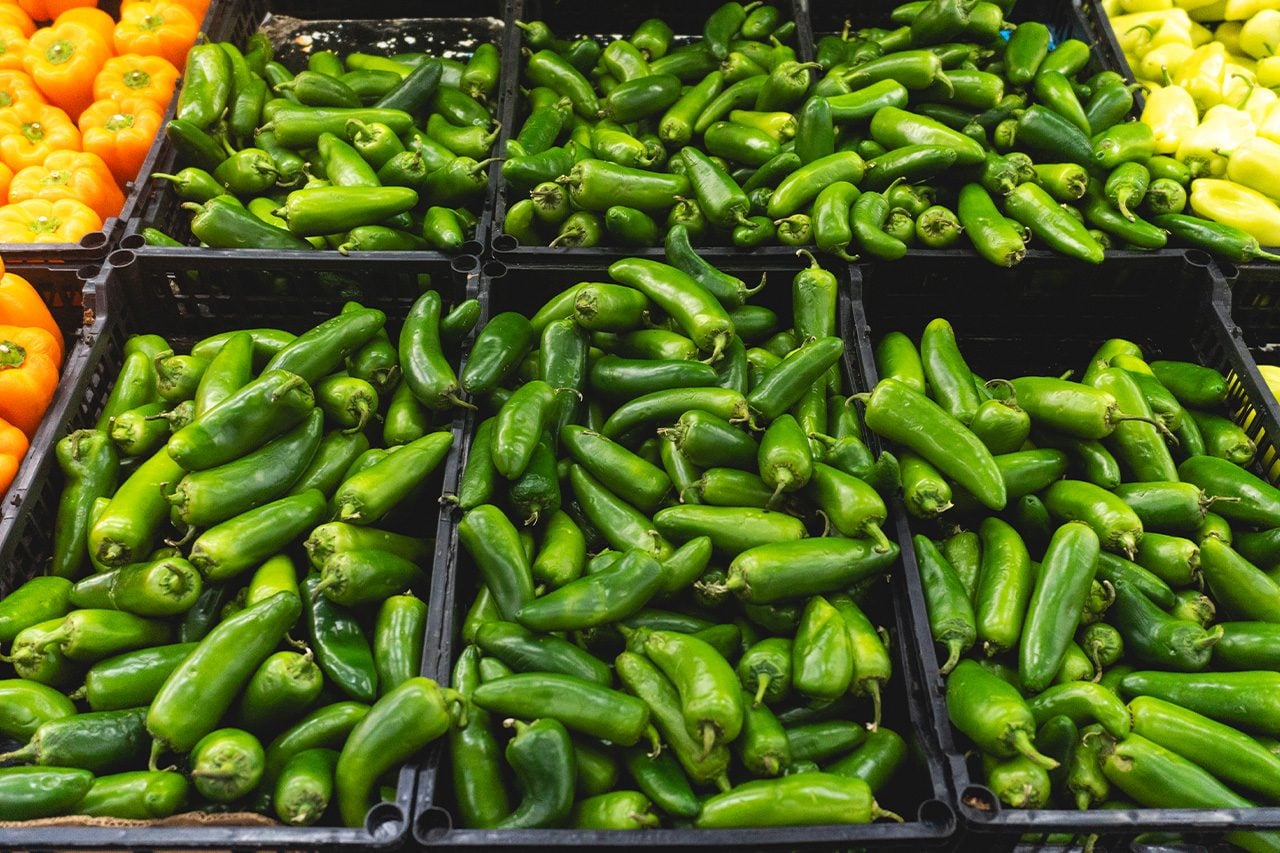

Choosing the spiciest jalapeno doesn't have to be a guessing game. These visual clues can help you spot the ones that pack some heat.
Fresh produce has a funny way of revealing its secrets. A watermelon tells you it’s ripe with its buttery yellow field spot. Sweet corn leaves clues in its husk and silk, and apples tell you everything you need to know with the color of their skin. Jalapenos are no different, and a few visual clues can give you a good idea of how hot your pepper is going to be.
That’s good news for someone who loves spicy food as much as I do. My pantry is always fully stocked with at least three varieties of hot sauce, an assortment of chili crisps and unholy amounts of crushed red pepper. When I buy jalapenos—for everything from salsa and queso to marinades and even the occasional spicy margarita—I’m looking for the spiciest ones I can find. When an ingredient is responsible for bringing that much heat, a disappointingly mild pepper feels like a wasted opportunity. Fortunately, there are a few ways to improve your odds before you even leave the grocery store.
How to Pick a Spicy Jalapeno
While there’s no foolproof way to predict exactly how spicy a pepper will be, there are a few visual clues that can help tilt the odds in your favor. If you’re hoping to bring home one with a little extra kick, here’s what to look for.
Look for a darker green color

Most grocery store jalapenos are green, but not all are the same shade. A deeper, richer green generally indicates a more mature pepper, which may have had more time to develop capsaicin than one that’s pale or bright green.
Once jalapenos ripen fully to red, they often develop a sweeter flavor—though they can still be quite spicy. If you’re choosing among green peppers, the darker ones are usually your best bet.
Check for corking
Those thin white lines running along some jalapenos aren’t blemishes. They’re a natural characteristic known as corking, and many pepper growers consider them the best visual indicator of a spicy pepper.
Corking develops as peppers grow and expand, often after the plant has experienced environmental stress from factors like changing temperatures or inconsistent watering. Although researchers haven’t definitively proven that corking predicts a hotter pepper, many growers still consider it one of the best visual clues to look for.
Consider the tip shape
This one comes with a bit of a caveat.
You’ll often hear gardeners, pepper growers and longtime home cooks say that jalapenos with a pointed, tapered tip tend to be hotter than those with a rounded one. Unlike corking, this clue isn’t as widely believed by pepper growers.
Even so, it’s one of those pieces of gardening wisdom that has been passed around for years. I wouldn’t choose a perfectly smooth pepper over one covered in corking just because it has a pointier tip, but if everything else looks about equal, I’d probably reach for the tapered one.
What actually makes a jalapeno spicy?

A jalapeno’s heat comes from capsaicin, a naturally occurring compound found in most chile peppers. It’s what causes that familiar burning sensation that spice lovers chase, and that everyone else reaches for a glass of milk to escape.
One of the biggest misconceptions about jalapenos is that the seeds are responsible for all that heat. In reality, most of the capsaicin is concentrated in the white membrane that holds the seeds in place. The seeds have a spicy reputation largely because they’re coated in it.
Exactly how much capsaicin a pepper develops depends on a variety of growing conditions, which is why no two jalapenos are exactly alike. The hottest pepper in the bin will always be something of a mystery, but jalapenos do leave a few clues behind for anyone who knows where to look.

