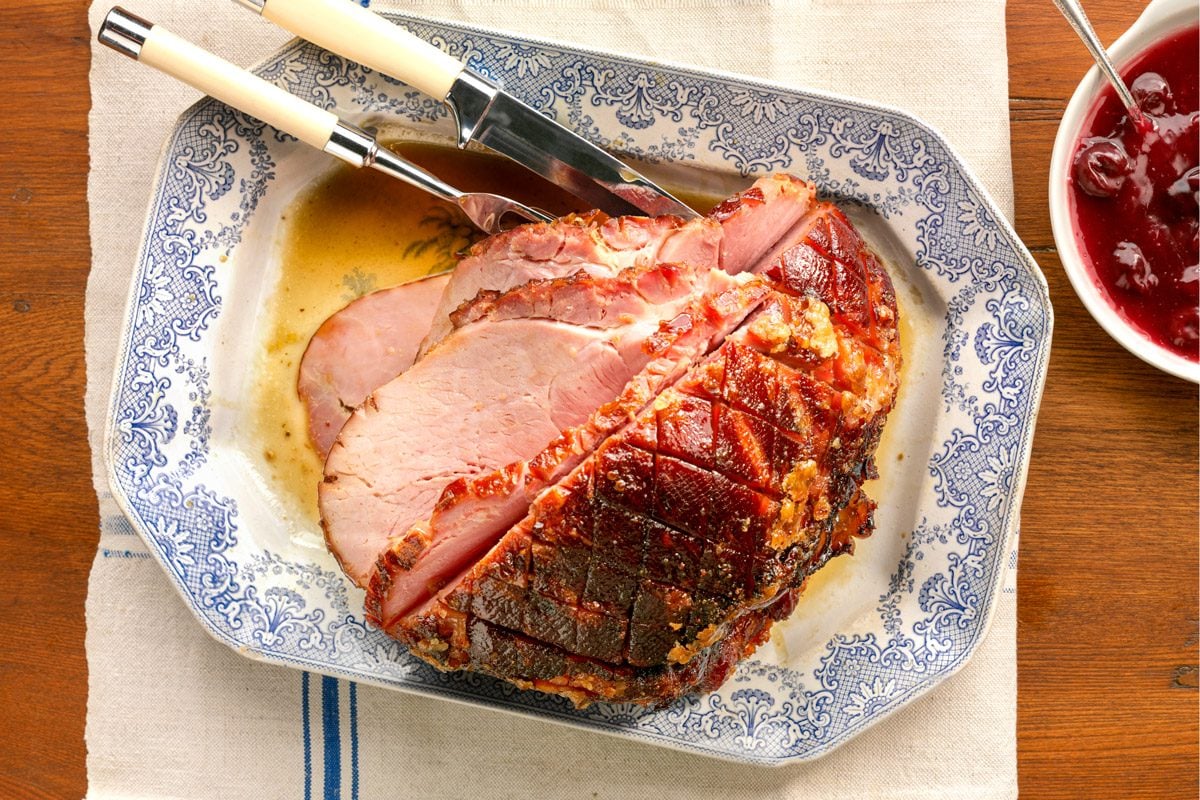
When it comes to picking the best ham to buy for your gathering or holiday feast, there are more choices than you think, so we've broken down what you need to know.
Whether you’re planning a big Sunday dinner or a holiday feast, a beautiful centerpiece-worthy ham makes the occasion feel special. Armed with one of our Easter ham recipes, you’ll still need to figure out the best ham to buy for your meal. Before you head to the store, there are many options to consider. City or country? Bone-in or boneless? And what about spiral-cut? It’s enough to make your head spin.
The first time I hosted Easter, I confidently headed to the store—only to discover I had no idea whether to get a shank end or butt end ham, or how big a ham I needed. I ended up just grabbing one and had so much leftover ham that my freezer ran out of room for all the soups and stews I made to use up the leftovers. Well, worry not! We’re here to give you the scoop on the best holiday ham for your special dinner so you can avoid my experience and buy the best ham for you.
Types of Ham
A ham is one of the most popular and best types of pork for serving a crowd. It comes from the hind leg of a hog, and a whole ham can weigh 15 to 20 pounds and serve up to 30 people. Unless you’re feeding a large group (or love leftover ham recipes), chances are you don’t need that much. Most stores offer various types of hams so you can buy a roast more in line with your gathering size. Below are some of the most popular hams you’ll find in the United States.
- City ham: This type of ham is predominantly what you will find at the grocery store as your typical holiday ham. It can be boneless, bone-in or spiral-cut. A city ham is usually wet-cured in a brine and then smoked or cooked. Since these are mostly sold fully cooked, they just need to be heated thoroughly before serving.
- Country ham: Country ham is harder to find. This type of ham is cured with a heavily salted dry rub, then hung to dry and age (the process is similar to making prosciutto). It may or may not be smoked, and it can be very salty and rather dry from the lengthy cure. It’s either served very thinly sliced or soaked for 24 hours before cooking. The intensely flavored meat is an acquired taste, but country ham—including Virginia ham—has a passionate following.
- Fresh ham: A fresh ham is just that: It’s an uncured, uncooked ham roast. You can order one from your local butcher or the meat department at a large grocery store, but it’s not a cut that’s usually stocked. If you want to cure and smoke a ham yourself from scratch, this is what you should start with. You can also cook a fresh ham as you would cook a pork shoulder (which comes from the front leg) for tender, fall-apart meat.
Bone-In vs. Boneless vs. Spiral-Cut Ham

Of course, bone-in, boneless and spiral-cut hams are all great options, but the taste and texture vary between them and fit different occasions. Bone-in hams are the juiciest and are often cut from the section of the leg with more marbling, which yields more flavorful meat. Boneless hams are leaner with a deli meat-like texture from being pressed together, but they’re super easy to slice. Spiral-cut hams are an impressive main, with layers that ruffle slightly when cooked, but if it comes pre-glazed, it can be sweeter than you may like.
Bone-in Ham
If you’re comfortable carving meat, a bone-in ham is worth the effort (this baked ham recipe wows every time!). The bone keeps the meat juicy as it reheats and fortifies the meat with a rich taste. As a bonus, the leftover bone is great for flavoring stews and soups, like this split pea soup.
Bone-in hams are sold as half hams, and you can buy the shank or the butt end. The shank end comes from the lower part of the leg, near the joint. The meat is leaner with one long bone running through it, which makes carving easier and gives the ham that iconic ham shape. The butt end is the top half, and it has more tender, well-marbled meat. However, its T-shaped bone can be tricky to carve around. Either one is manageable once you learn how to carve ham to avoid the trouble spots.
To cook a fully cooked bone-in ham, set it in a roasting pan, flat-side down, and score the outside in a crosshatch pattern so the glaze can flavor the meat as it cooks. Add some water, juice or broth to the pan to keep the ham from drying out, and bake at 325°F until the internal temperature reaches 140°, glazing several times during the last 30 to 45 minutes, if desired.
Boneless Ham
If convenience is more important to you than presentation, boneless ham is a solid option. To keep a boneless roast together, the bone is removed and the meat is salted, breaking down the proteins so it can be re-formed, in a sense. The meat is firmly pressed, usually in a long oval, so the slices hold together. The lean, firm texture is similar to deli meat, and it can be much saltier than bone-in ham, but the even shape makes it the easiest to carve. I think it makes the best leftover ham sandwiches.
Add a boneless ham to a baking dish with some liquid to keep it tender, cover and bake at 325° until heated through. Even though the meat is more compact, the lack of a bone helps it cook through more quickly. Boneless ham is often smoked, but to add extra flavor, you can glaze it in the last few minutes or briefly broil it. My favorite easy glaze is to mix a fruit preserve, like pineapple, apricot or apple jelly, with a splash of vinegar for tang.
Spiral-Cut Ham
A spiral-cut ham is a bone-in city ham (you can sometimes find boneless ones as well) that has been pre-cut around the bone to make carving easier. In the 1940s, Harry Hoenselaar invented the spiral-slicing machine. It holds a ham while an oscillating blade makes thin cuts into the meat around the bone. Spiral-cut ham is a heat-and-serve holiday classic for its pretty appearance and neatly spaced layers.
The texture is similar to a bone-in ham, but pre-cutting exposes the meat to air, which can make it a little dry. This is why glazing a spiral-cut ham is a popular way to cook it. Just set it in a roasting pan, flat-side down, with some liquid, then cover and bake it at 300° to 325° until the internal temperature reaches 140°, glazing frequently during the last 45 minutes until the edges of the slices are lightly browned and caramelized.
It’s worth noting that some spiral-cut hams are glazed before packaging, so if you want to flavor your own spiral ham, you’ll want to avoid that. Be sure to read the label to make sure you’re getting an unglazed ham. I find the ones that come with a pouch of glaze are often too sweet and one-note, so I either discard the glaze or doctor it up with vinegar, mustard and a few spices.
How Much Ham to Buy
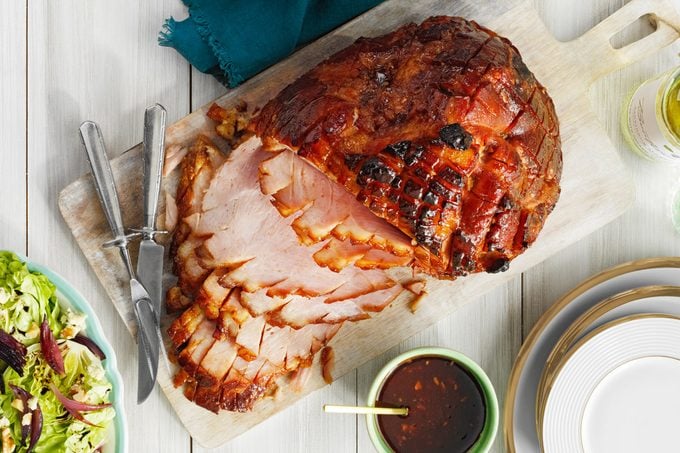
Just as with any large roast, you’ll want to buy a ham large enough to serve the number of people you expect but not so much that you are overwhelmed by the extras. Since bone weight and ease of carving can factor in, we’ve broken down here how much ham you’ll need per person for each type. If you are making a ton of side dishes, err on the lower end of the range, unless you love ham leftovers or want to freeze cooked ham for future meals.
- Bone-in ham: Plan for 3/4 to 1 pound per person.
- Boneless ham: Plan for 1/2 pound of boneless ham per person.
- Spiral-cut ham: Plan for 1/2 to 3/4 pound per person. You can get away with a slightly smaller spiral-cut ham than a regular bone-in ham because the cutting process around the bone makes it easier to carve, ensuring little meat is left behind.
How to Choose the Best Ham
Beyond the different cuts of ham, there are a few other factors to consider when choosing the best ham: Look at the label to see if it says, “Ham,” “Ham with natural juices,” “Ham, water added,” or “Ham and water product.” Hams with less water have a stronger flavor and a more natural, meaty texture. Most hams are high in sodium and contain nitrates used in the curing process. You can buy nitrate-free hams if you prefer, and compare sodium levels across brands, since they can vary.
If the ham isn’t completely wrapped, look for marbling in the meat (ribbons of fat that run through) and a layer of fat on the outside of the ham. Both of these indicate juicy, tender ham that won’t dry out in the oven. Below are some of the other ham terms you might see in the supermarket or while browsing recipes.
- Heritage ham: A heritage ham is harvested from a collection of pig breeds that were common before large-scale commercial pig farming became the norm. These breeds are typically raised on small farms, and the meat is sold on-site, at a farmers market or online. Heritage ham often has a stronger, meaty flavor that shines through the cure, but it can be more expensive.
- Smoked ham: Many hams are smoked after they are cured to infuse the meat with rich flavor. The label will indicate either way. If you prefer to make your own smoked ham, start with a fully-cooked bone-in ham and the wood chips you prefer. I like apple wood for a milder smoke taste and hickory wood for a more intense flavor.
- Glazed ham: A glaze is a sweetened sauce brushed over the outside of the ham to add shine, a caramelized crust and a sugary taste to offset the salty meat. Glazes can be made from honey, brown sugar, maple syrup or fruit preserves, along with other flavors, as in this bourbon-glazed ham or maple-peach glazed ham. Some hams are glazed before being sold, so if you would prefer to glaze it yourself, check the label before buying.
Ham Buying FAQ
Where is the best place to shop for ham?
A butcher shop or local farm is the best place to shop for ham because you can request the size and cut you prefer, and more easily judge the meat’s quality and marbling. However, the supermarket is fine as well. There are a few major national brands available wherever you shop, while others might be exclusive to stores like Aldi or Costco, which sell their own brands. Checking the sodium or sugar content of the ham, plus any added liquid, is a good place to start when choosing a ham.
What is the best ham for the holidays?
The best ham for the holidays is the one that complements the rest of the meal, the size of the gathering and the season. In the winter, I love a ham flavored with warm fall spices, like the clove and cinnamon in this honey-glazed ham. In the spring, a touch of fruit, like the orange marmalade in this Easter ham, matches the lightness of the warmer days. A root beer-glazed ham would work for any holiday. Add a few seasonal herbs and fruit for garnish to make any ham a holiday centerpiece.
How long does it take to thaw a frozen ham?
Ham lasts in the freezer for one to two months, so when it’s time to thaw, the USDA recommends four to six hours per pound in the refrigerator or 30 minutes per pound submerged in cold water, changing the water every 30 minutes. Thawed ham can be a little more soggy than fresh, especially for hams with added water, but wrapping it well and freezing food properly will reduce the textural changes.
Watch How to Make Ham