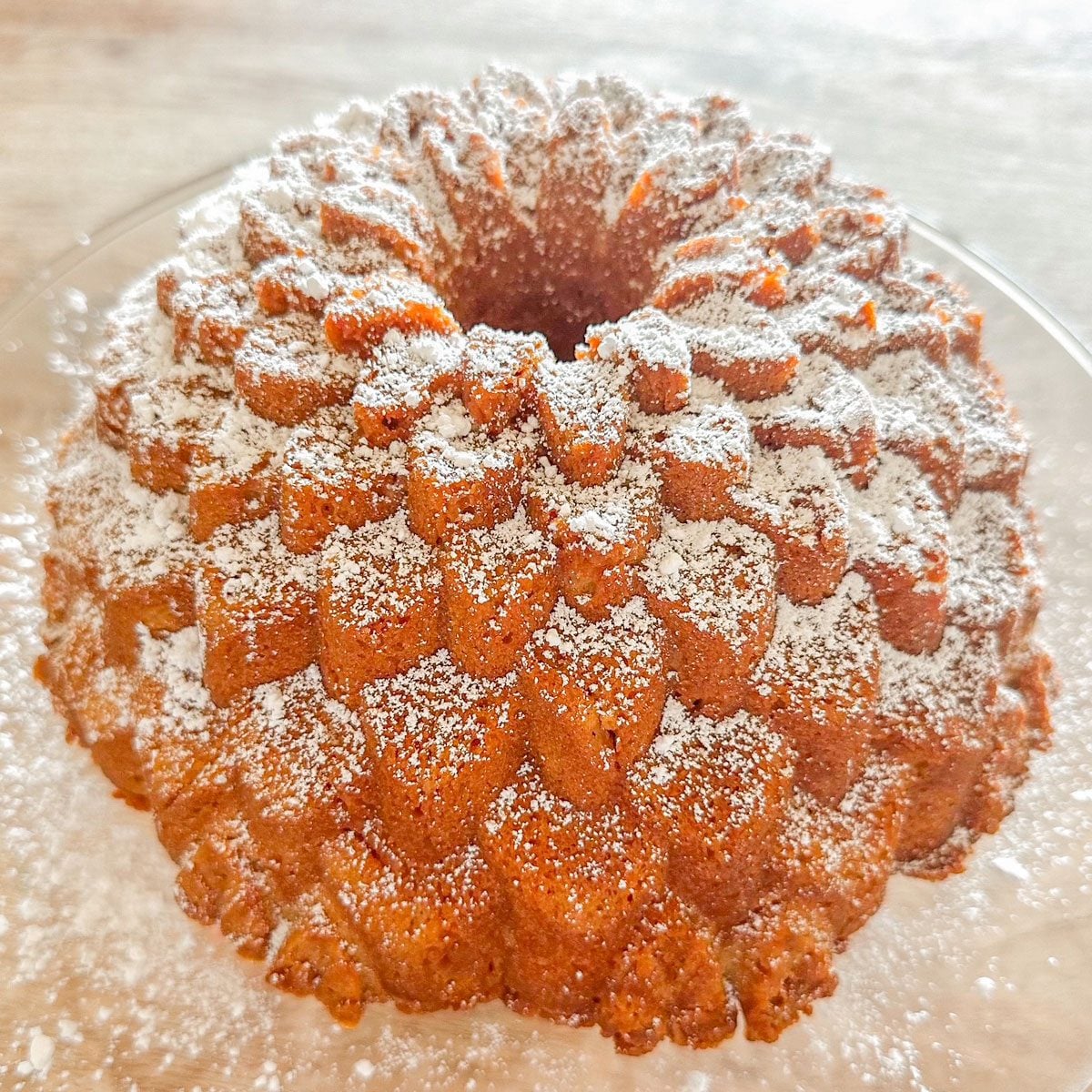
My most stubborn Bundt pan finally met its match.
There are certain kitchen tools that make perfect sense when you’re standing in the store holding them and significantly less sense once you get them home.
For me, that’s Bundt pans. I own an embarrassing number of them—at least 10, maybe more if we’re counting the ones tucked behind roasting pans and holiday serving platters. Years ago, when I got my first real kitchen, I went through a phase where I enthusiastically collected cooking and baking equipment as if I planned to open a small bakery at any moment. The Bundt pans came home one by one: elegant swirls, intricate floral designs and dramatic shapes that promised baker-worthy cakes with very little effort.
They’ve followed me from house to house ever since, taking up an unreasonable amount of cabinet space. The problem is that I only use one or two of them regularly. While those elaborate designs are beautiful, every extra groove, petal and curve creates another opportunity for a cake to cling stubbornly to the pan. Even with the best Bundt cake tips and tricks, some pans seem determined to hold on to every last crumb.
My chrysanthemum Bundt pan is the worst offender. It’s easily one of the prettiest pans I own, but I’ve had enough disappointing cake release experiences with it that I rarely reach for it anymore. So when I started seeing a Bundt cake trick making the rounds online that promised easier cake release through the power of steam, I knew this was the right pan to try it with. If it worked, it might finally convince me to pull my chrysanthemum pan out of retirement.
What is the Bundt cake steam trick?
According to baker and content creator Dan Langan, covering a freshly baked Bundt cake with foil for about 20 minutes after baking helps loosen the cake from the pan. The theory is that the trapped steam helps loosen any areas where the cake might be clinging to the pan, making it easier to release cleanly.
It isn’t a replacement for properly preparing your pan. You’ll still want to thoroughly grease and flour your pan—or use a baking spray—before adding the batter. The steam trick is simply an extra step intended to make release even easier.
For anyone who has ever held their breath while inverting a Bundt cake, hoping an intricate design won’t stick to the pan, the promise is understandably appealing.
How to Try the Steam Trick at Home

For the test, I baked our classic pound cake in my notoriously finicky chrysanthemum pan. I prepared the pan with PAM Baking Spray, filled it with batter, then followed the steam trick exactly as directed, wrapping the hot pan in foil and letting it rest for 20 minutes before unmolding it.
Then came the moment of truth.
Usually, releasing a cake from this particular pan involves a great deal of anxiety. There’s often a gentle shake, a hopeful tap or two and a brief internal negotiation with the baking gods. This time, the cake practically released itself.

When I inverted the pan, there was no resistance whatsoever. The cake didn’t cling to a single petal of the chrysanthemum design. Every last crumb came out perfectly intact, leaving behind an almost shockingly clean pan. Of course, I’ve had cakes release successfully before, but this was different. The cake almost slipped out before I finished flipping it!
I rarely describe kitchen hacks as game-changing, mainly because most of them aren’t. This one absolutely is. The steam trick won’t replace properly preparing a Bundt pan, but it may be the most effective insurance policy I’ve found for intricate molds and detailed designs. My neglected Bundt pan collection has officially earned its way back into regular rotation.
Related: