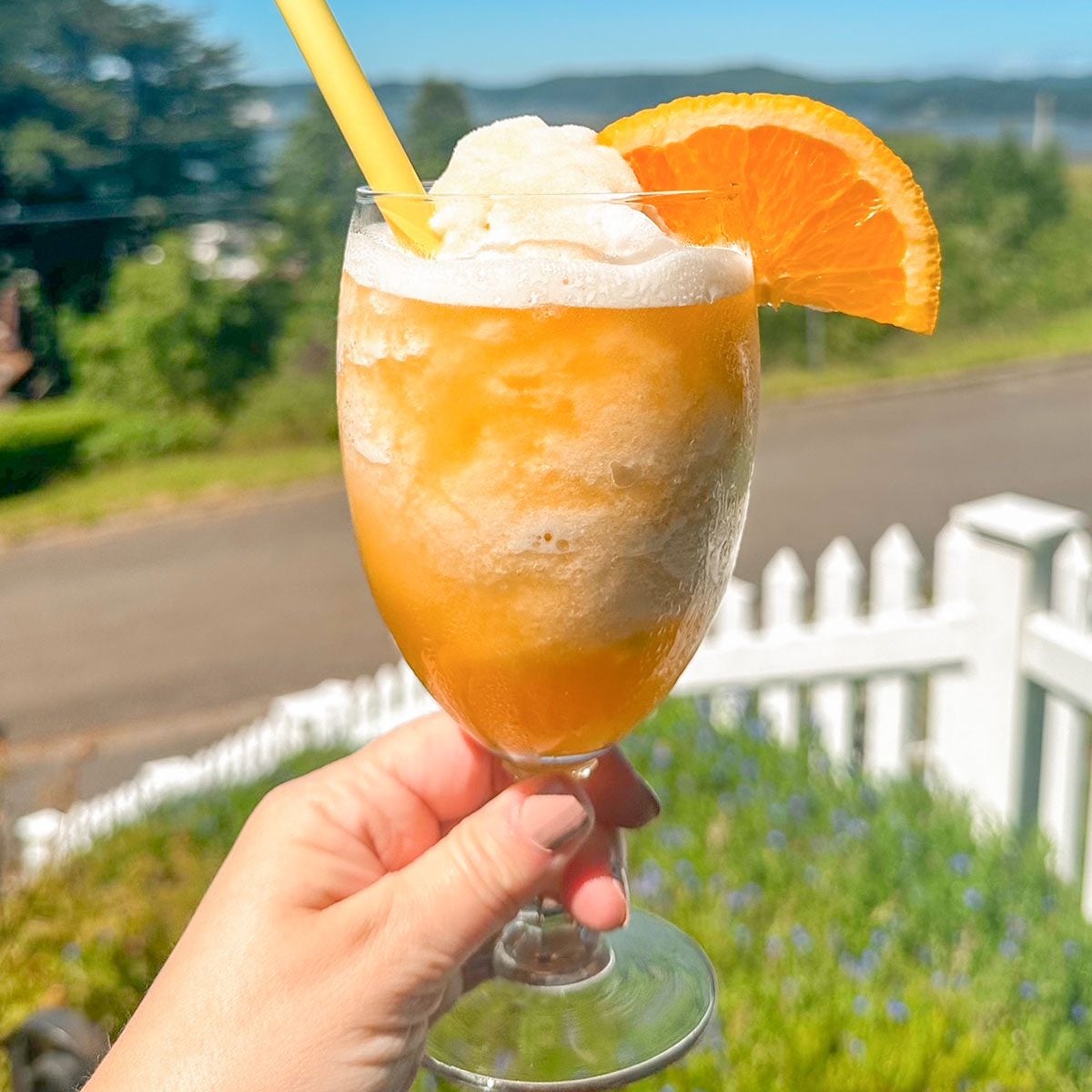
The bubbles disappeared, yet the drink's texture stole the show.
Our editors and experts handpick every product we feature. We may earn a commission from your purchases.
Learn more.
For a long time, I was convinced I wasn’t a beer person. This was a perfectly reasonable conclusion based on what was available to me in my early twenties, which consisted largely of warm, cheap beer in red Solo cups or whatever somebody’s roommate had left behind in a cooler. While everyone else was hovering around a keg, I was usually sneaking away to the kitchen to make myself a margarita or a gin and tonic. But then a boyfriend introduced me to Hoegaarden and completely upended my feelings about beer.
The boyfriend didn’t stick around. The beer did.
These days, I’ll happily drink everything from creamy Guinness to the most bitter IPA, though I still have a soft spot for bright, citrusy wheat beers that taste like sunshine. I’m also a little more willing to try unexpected things than I was in my red Solo cup era. So when I learned breweries were turning beer into slushies, my reaction was less “absolutely not” and more “tell me more.”
What are beer slushies?
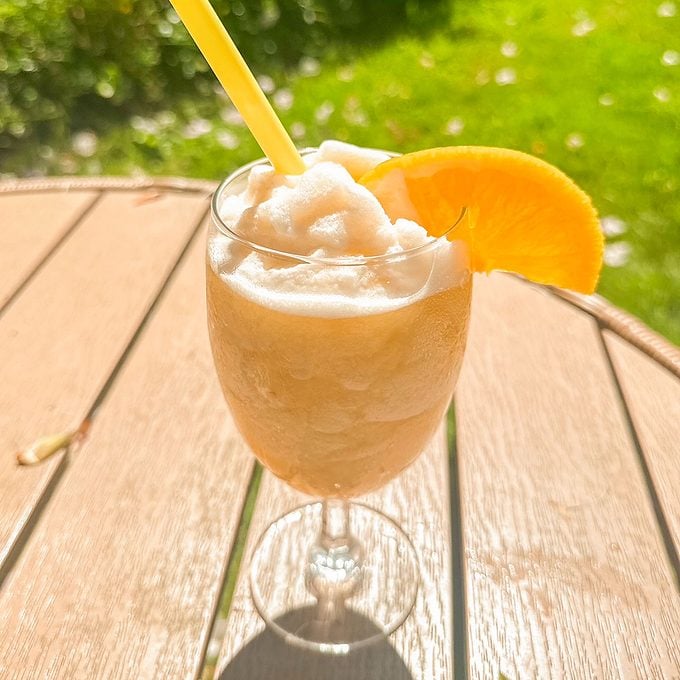
At breweries, beer slushies are usually made in frozen drink machines—the same kind used for margaritas or frozen lemonade. Beer goes in with fruit juice and/or simple syrup, and out comes a frosty drink that sits somewhere between a pint and a frozen cocktail. Fortunately, you don’t need any special equipment to make a beer slushie at home. All it takes is frozen beer and a blender!
How to Make a Beer Slushie
For my test, I reached for Blue Moon, one of my favorite beers. Its bright citrus notes make it especially refreshing on hot days, and the traditional orange slice used as a garnish made turning it into a frozen drink feel like a natural next step.
Here’s what I used:
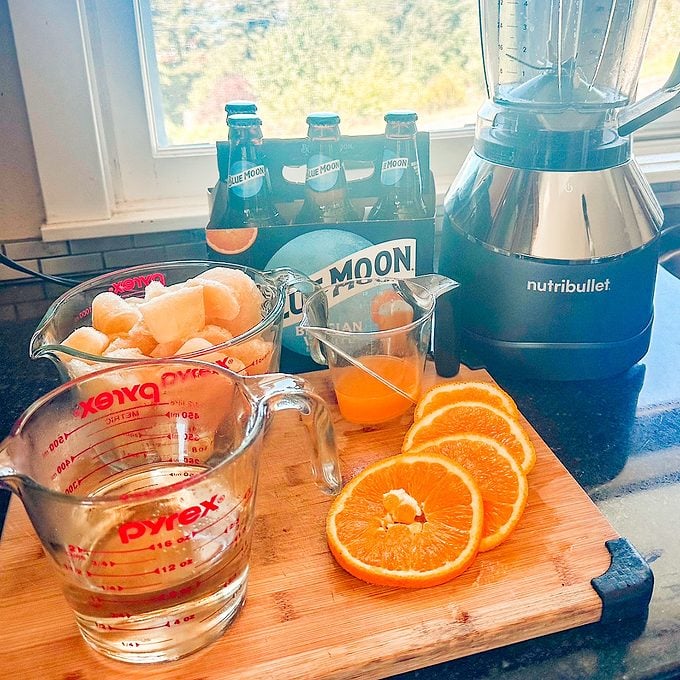
- 1 bottle (12 ounces) Blue Moon
- 1/4 cup orange juice
- A generous splash of simple syrup
- Orange slice, optional
To make the slushie, I poured the beer into an ice cube tray and froze it overnight. Once the cubes were solid, I added them to a blender with the orange juice and simple syrup, then blended them until the mixture was smooth. I poured the finished slushie into a large water goblet, though any glass you might use for a frozen cocktail would work just as well.
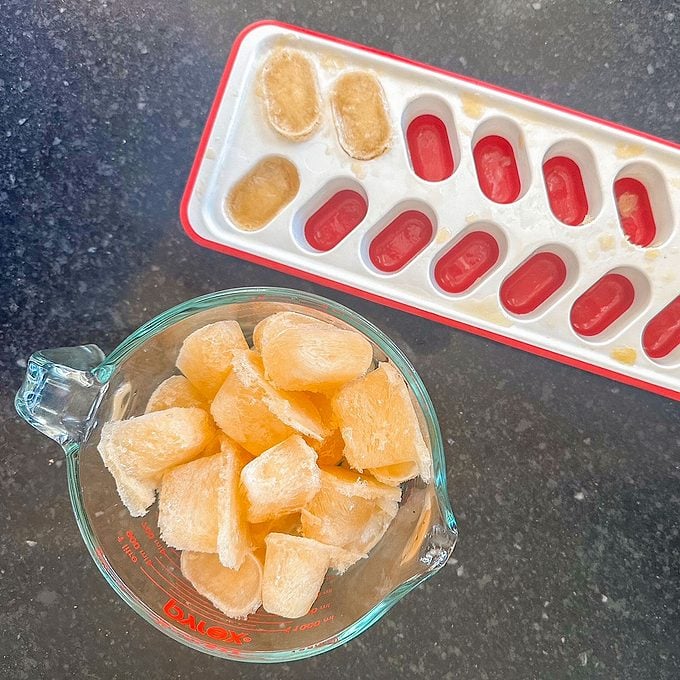
The simple syrup matters more than you might think. It’s not there only to make the drink sweeter; it helps keep the texture from becoming too hard and icy, which is especially useful when you’re making this without the constant chilling and churning of a frozen drink machine.
The beer matters, too. Wheat beers, fruit beers, lagers and light ales are the best place to start. Anything too bitter can become even more intense once frozen, so I would save the double IPA for another day. Heavy stouts and porters can work in theory, but they would need a different treatment—probably with coffee, chocolate or creamier flavors.
Beer Slushie Variations
Once you understand the basic formula, beer slushies are easy to play with. You could blend in frozen strawberries, peaches, mango or other fruit for a more smoothie-like drink, or you could experiment with different juices to complement the beer you’re using. Wheat beers pair particularly well with citrus, while lighter lagers can handle everything from peaches to berries.
You can also make beer slushies with nonalcoholic beer or soda. Simply freeze the drink you’re using into cubes and follow the same process. Once you realize the technique works with almost any beverage, it’s hard not to start experimenting. Root beer seems like an especially good candidate for this technique. Add a scoop of vanilla ice cream, and you’ve got a cross between a root beer float and a milkshake.
How does it taste?
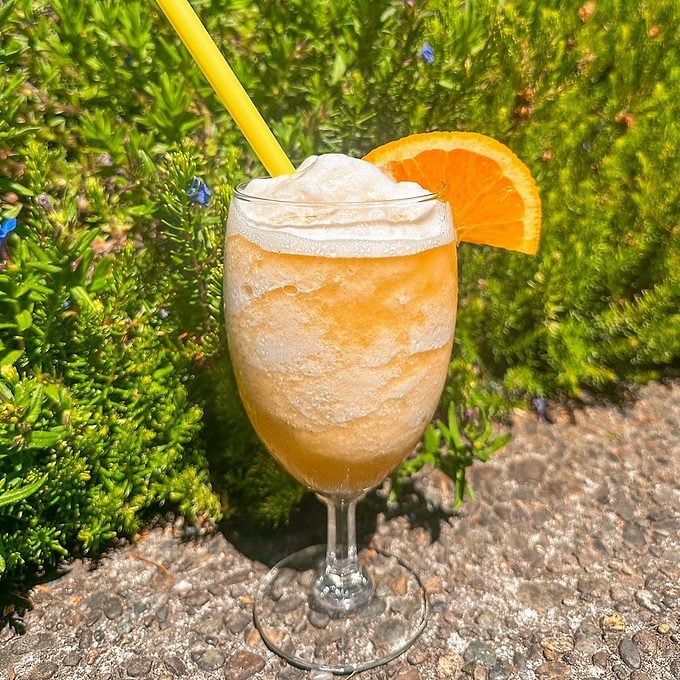
My biggest question going into this experiment had nothing to do with orange juice or simple syrup, but with the beer itself. Beer is defined by carbonation. The bubbles carry aromas to your nose, and give cold beer the crisp, refreshing texture that makes it so satisfying in the first place. Freezing and blending it seemed like a good way to lose all of that.
And, to be fair, the carbonation didn’t survive its sojourn in the freezer. Much of the dissolved carbon dioxide escapes as the beer freezes, leaving the finished drink noticeably less bubbly. But what replaced the bubbles surprised me. I expected something resembling a beer snow cone. Instead, the mixture whipped up into a thick, almost velvety drink that was far creamier than I anticipated. As it melted, the texture slowly shifted from smooth and frosty to slushy and more granular. Normally, I’d consider that a drawback, but here I found myself enjoying the evolution.
Drinking beer without carbonation was admittedly a little strange at first. My brain kept expecting bubbles that never arrived. But after a few sips, the texture won me over. The citrus from the orange juice played nicely with the beer, and the smooth, frosty consistency made the whole thing feel more like a frozen cocktail than a pint.
Beer has surprised me before, and apparently it still has a few tricks left. Will I be turning every beer in my refrigerator into a slushie? Probably not. But I will absolutely be making this version again throughout the summer.
Related: